
Concrete Blog
Stamped Concrete Problems: 5 Common Issues and How to Prevent Them
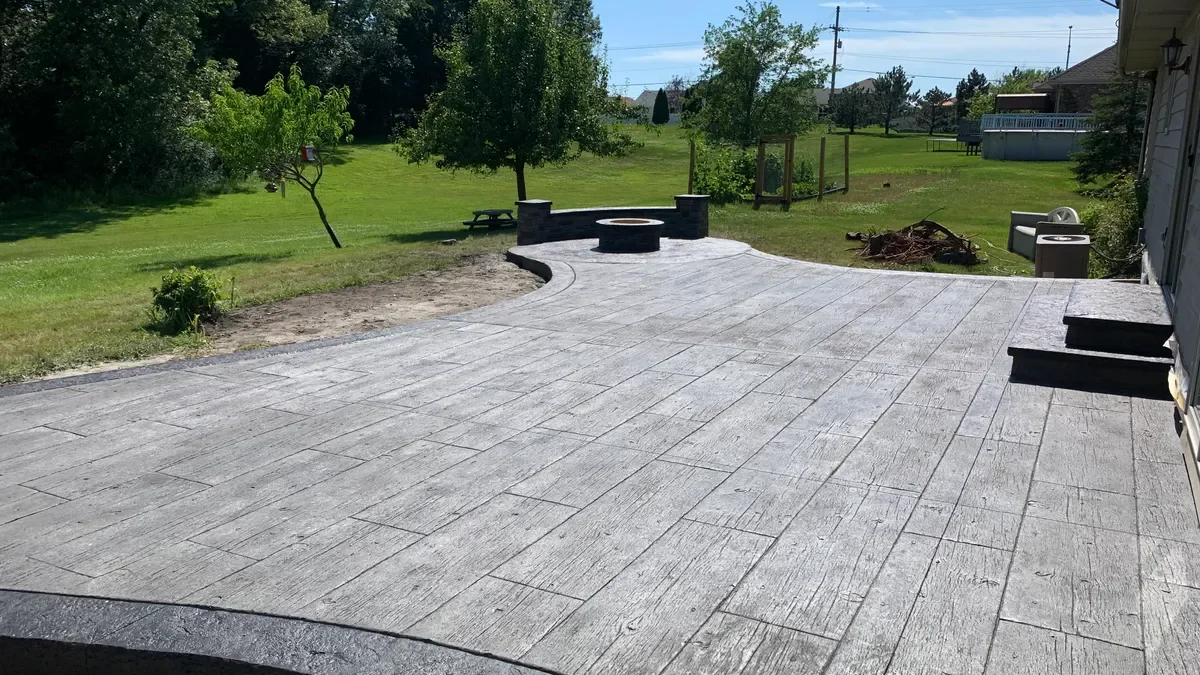
The most common stamped concrete problems are cracking, color fading, sealer failure, surface spalling, and slab settlement. Each one traces back to either installation shortcuts or skipped maintenance rather than a flaw in the material itself. Hoosier Concrete Construction has been repairing and preventing these issues across Northwest Indiana for nearly three decades.
Homeowners who search for stamped concrete problems usually assume the surface itself is the issue. It almost never is. The failures happen underneath, in the base preparation, the mix design, or the sealing schedule that follows. Understanding what actually goes wrong helps you ask better questions before a project starts and maintain your surface properly after it cures.
1. Cracking
Hairline cracks in stamped concrete are normal. Decorative concrete shrinks slightly as it cures, and seasonal expansion and contraction create minor surface cracks over time. These hairline cracks don't affect the slab's structural integrity.
Wider cracks signal deeper problems. Insufficient sub-base compaction allows the slab to settle unevenly. Too much water in the concrete mix increases shrinkage. Missing or poorly placed control joints force the slab to crack in random locations instead of along planned relief lines. In NW Indiana, where clay-heavy glacial soils shift with moisture changes, proper compaction and joint spacing are non-negotiable.
2. Color Fading
UV exposure gradually breaks down the color hardener layer on stamped concrete surfaces. Without sealer, noticeable fading can appear within one to two years. Uneven fading, where some areas lose color faster than others, typically results from inconsistent color hardener application during the original pour.
Prevention is straightforward: reseal every two to three years with a UV-protective acrylic sealer. Two thin coats applied in dry conditions above 50 degrees provide better coverage than one thick coat, which can trap moisture and cause white hazing.
3. Sealer Failure
White hazing, peeling, and a cloudy film on stamped concrete surfaces are signs of sealer failure. The most common cause is applying sealer too thickly or in humid conditions. When a heavy coat traps moisture between the sealer and the concrete, the film turns milky white as the water tries to evaporate.
Applying sealer to a dirty or damp surface also causes adhesion failure. The fix requires stripping the failed sealer with a chemical stripper or xylene, allowing the surface to dry completely, and reapplying in proper conditions.
4. Surface Spalling and Delamination
Spalling is when the top surface of the concrete chips, flakes, or pits, exposing the aggregate underneath. In NW Indiana, the primary cause is freeze-thaw cycling. Water penetrates the surface, freezes, expands, and breaks apart the top layer from the inside.
Three factors accelerate spalling: deicing salts that increase the number of freeze-thaw cycles the surface experiences, concrete mixed without adequate air entrainment, and sealer that's worn through and no longer blocking moisture. Air-entrained concrete resists spalling because microscopic air bubbles inside the mix absorb the expansion pressure from freezing water.
5. Slab Settlement
Settlement happens when the ground beneath the slab compresses unevenly, causing one section to sink lower than the rest. In Dyer, Crown Point, and throughout Lake County, the clay-heavy soils expand when wet and shrink when dry. That movement creates voids under the slab that the concrete eventually settles into.
Prevention requires proper excavation, a compacted gravel sub-base of at least 4 inches, and correct grading for drainage. A contractor who pours directly onto uncompacted clay or topsoil is building in a settlement problem that will show within two to five years.
Frequently Asked Questions
Does stamped concrete crack easily?
Stamped concrete cracks at the same rate as any other concrete surface. Cracking depends on base preparation, mix design, control joint placement, and curing conditions. Properly installed stamped concrete with air-entrained mix and correct joint spacing handles NW Indiana's freeze-thaw cycles without significant cracking.
Can stamped concrete problems be repaired?
Minor cracks can be filled with color-matched caulk or patching compound. Faded color can be restored with a fresh sealer application. Sealer failure requires stripping and reapplication. Severe spalling or settlement typically requires partial or full slab replacement. Hoosier Concrete Construction evaluates stamped concrete repair needs on-site.
How long should stamped concrete last without problems?
Properly installed and maintained stamped concrete typically lasts 25 to 30 years in NW Indiana. The key variables are air-entrained mix, adequate slab thickness, compacted sub-base, correct control joints, and resealing every two to three years. Skip any of these and problems appear within three to five years.
Build It Right the First Time
Every stamped concrete problem on this list traces back to either an installation shortcut or skipped maintenance. The material itself performs well for decades when the base is compacted, the mix is air-entrained, the color system is applied correctly, and the sealer is refreshed on schedule. Prevention costs a fraction of what repairs do.
Contact Hoosier Concrete Construction at (219) 712-3508 to discuss your stamped concrete project with a contractor who's been preventing these problems in NW Indiana since 1998.