
Concrete Blog
Stamped Concrete vs Pavers: Which Is Better for Indiana Driveways and Patios?
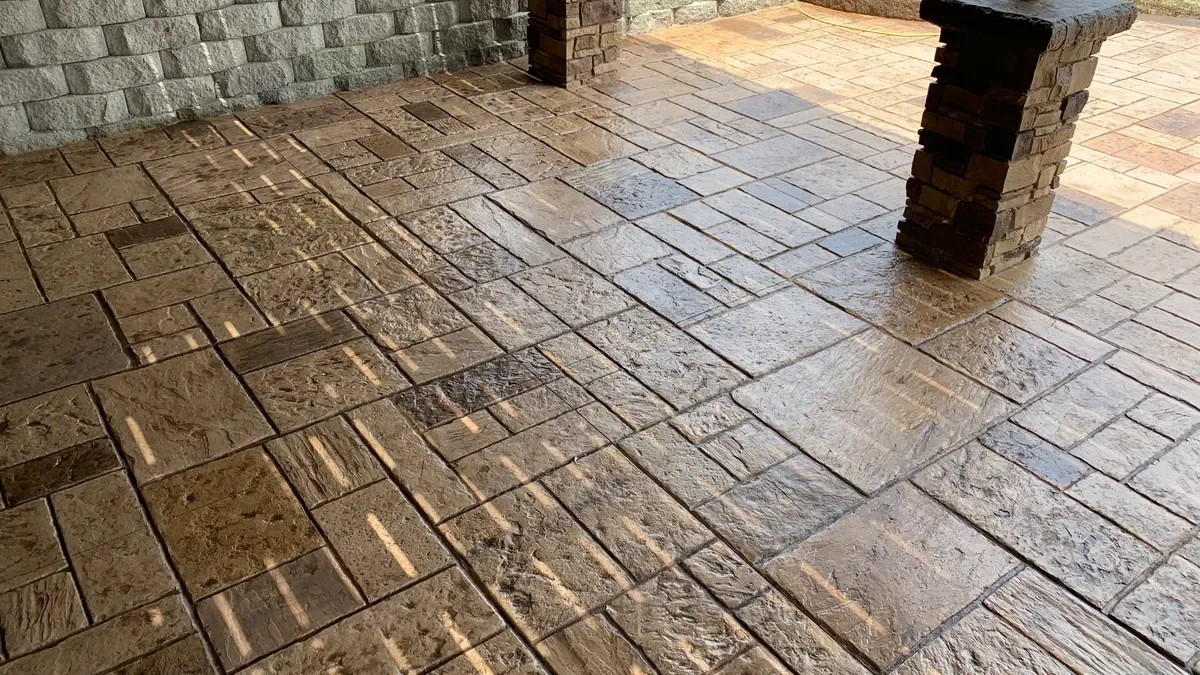
For Indiana driveways and patios, stamped concrete is typically the better choice because it handles NW Indiana's clay soil and freeze-thaw cycles more reliably than paver units that depend on a stable base. Stamped concrete runs $15 to $25 per square foot installed and typically lasts 25 to 30 years with routine sealing, while pavers fall between $15 and $35 per square foot and often need periodic re-leveling as clay soil shifts beneath them.
If you've spent any time researching stamped concrete vs pavers, you've found solid arguments for both. The factor most guides skip is what happens to each material after five winters in Northwest Indiana. Hoosier Concrete Construction has been helping Lake and Porter County homeowners work through this choice since 1998.
How These Two Materials Actually Compare
Stamped concrete is poured as a single continuous slab, then textured with rubber stamps to mimic stone, brick, or slate. No individual units to shift, no joints for weeds. A well-built stamped patio typically lasts 25 to 30 years with proper sealing.
Pavers are individual units set on a compacted sand and gravel base. They’re replaceable if one cracks, but entail higher labor costs. In NW Indiana's soil, base shortcuts show up fast.
Why NW Indiana Clay Soil Changes the Equation
NW Indiana sits on clay-heavy glacial soil that expands when wet and contracts when dry. Lake County's frost depth reaches 30 to 36 inches, and that ground freezes, moves, and thaws repeatedly every winter.
What This Means for Pavers
Pavers are only as stable as the base beneath them. When clay shifts seasonally, individual units shift with it. Some rise, some sink. Re-leveling means pulling sections, re-compacting, and resetting. In NW Indiana clay, that's a recurring cost.
What This Means for Stamped Concrete
A poured slab handles clay movement differently. Sub-base compaction, a gravel bed, and correctly spaced control joints (the score lines that guide cracking to planned locations) keep the slab stable through seasonal shifts. Cracking on a well-prepared base stays cosmetic rather than becoming a structural issue.
Concrete driveway replacements make this especially clear. Driveways support the weight of vehicles on top of seasonal soil movement—a combination that paver driveways in clay soil handle less reliably than concrete.
Maintenance: What Each Option Actually Demands
Stamped concrete needs resealing every two to three years to protect its color and surface from salt, freeze-thaw damage, and UV fading. No re-leveling, no re-sanding—just a consistent resealing schedule.
Pavers need periodic joint re-sanding plus re-leveling in clay soil every several years. Matching replacement units later is tricky too, since colors weather and product lines change.
For a concrete patio in St. John or Porter County, the choice is simple: one sealing task every few years or recurring leveling work on ground that won't stay put.
Which Option Makes More Sense for Your Property?
Pavers make sense when having a natural stone appearance outweighs other factors, or for small walkways with no vehicle traffic. For most NW Indiana driveways and larger patios, stamped concrete is the more practical choice.
In Crown Point, Valparaiso, and St. John, clay soils are the norm. A continuous slab handles them better than individual units competing with ground movement every season.
Frequently Asked Questions
Can stamped concrete crack in Indiana winters?
Yes, stamped concrete can crack, but proper installation substantially reduces the risk. Control joints guide stress to planned locations, and air-entrained mixes include air pockets that absorb freeze-thaw pressure. Resealing every two to three years keeps moisture out. Most cracking on a well-installed NW Indiana slab is hairline and cosmetic, not structural.
How do pavers and stamped concrete compare for resale value in NW Indiana?
Both add curb appeal, but stamped concrete holds its appearance better in clay soil because it doesn't settle the way pavers do. A level, well-sealed stamped driveway in St. John or Valparaiso signals to buyers that the property has been maintained, while uneven pavers or settling issues raise red flags during a walkthrough.
Does Hoosier Concrete Construction install pavers?
No, Hoosier Concrete Construction specializes exclusively in residential concrete work across Lake and Porter counties, including stamped, decorative, and broom-finish flatwork. For driveway replacement or patio projects, the team can walk you through your pattern, finish, and pricing options during a free consultation.
Stamped Concrete: The Cleaner Choice for NW Indiana
Stamped concrete costs less to install, lasts 25 to 30 years with routine sealing, and handles clay soil and freeze-thaw winters more reliably than paver units that depend on a stable base. Pavers ask more of the ground beneath them—and around here, that ground pushes back.
Contact Hoosier Concrete Construction or call (219) 712-3508 for a free quote. Our team has been pouring and finishing concrete for NW Indiana homeowners since 1998. We’ll tell you straight what makes sense for your property.