
Concrete Blog
Is Stamped Concrete Slippery? Safety Facts for Pool Decks, Patios, and Walkways
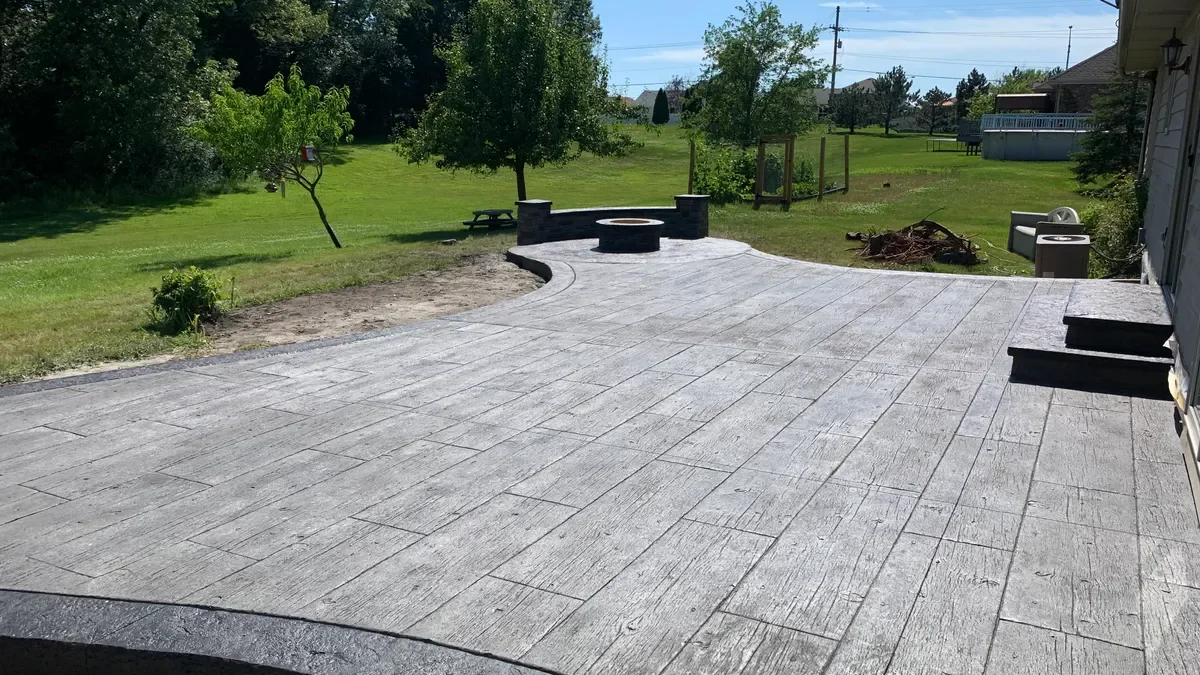
Stamped concrete isn't slippery when it's installed with the right texture and sealed with a non-skid additive. The textured surface meets the same wet-area safety standard used for tile and porcelain in commercial spaces, meaning a properly built stamped pool deck offers the same grip as the bathroom floors at a hotel or restaurant. Hoosier Concrete Construction installs stamped concrete pool decks, patios, and walkways across NW Indiana with anti-slip treatment built into every project.
A Valparaiso homeowner asked us last spring whether her new pool deck would be safe for kids running barefoot after the rain. The answer comes down to three things: pattern depth, sealer type, and the grit mixed into the final coat. This guide breaks down how stamped concrete actually performs in wet conditions, the non-skid additives that improve traction, and the pattern-and-sealer choices that matter most for pool decks and patios.
How Stamped Concrete Can Become Slippery
Stamped concrete itself has built-in texture from the stamp pattern, but the sealer applied afterward can create a slick surface when wet.
High-gloss acrylic sealers form a smooth film that reduces friction, especially around pool decks where water sits on the surface. Wet leaves, pool splash-out, and algae growth compound the problem. The concrete underneath isn't the issue; the coating on top is. That's why sealer selection and anti-slip additives matter more for traction than the concrete finish itself.
In NW Indiana, where pool decks, patios, and walkways face rain, snow, and heavy foot traffic across six months of wet weather, sealer condition becomes the single biggest factor in surface safety.
Non-Skid Additives That Improve Traction
Several types of non-skid additives can be mixed directly into concrete sealers to restore grip on stamped surfaces.
Polymer Grit
Micronized polypropylene powder blends into the sealer and creates a textured surface that's nearly invisible. It provides reliable wet traction without changing the look of decorative patterns. This is the most common choice for residential patios and pool decks where appearance matters.
Aluminum Oxide and Silica Sand
Aluminum oxide grit provides aggressive traction for high-traffic areas like walkways and pool deck entry points. Silica sand offers a budget-friendly alternative with solid wet grip. Both are visible on the surface, so they work best in areas where function outweighs aesthetics.
All three additives are mixed at 1 to 4 ounces per gallon of sealer and reapplied every 2 to 3 years during routine resealing—the same maintenance schedule Hoosier Concrete Construction recommends for all stamped surfaces in NW Indiana.
Choosing the Right Pattern and Sealer for Safety
Pattern depth and sealer sheen both affect how much traction a stamped surface provides.
Pattern Depth
Deeper stamp patterns like ashlar slate, cobblestone, and heavy stone textures channel water away from the walking surface and provide natural grip even without additives. Shallow patterns like Italian slate or seamless textures hold water on the surface and need anti-slip treatment in wet-exposure areas.
Sealer Sheen
Matte and satin sealers outperform high-gloss finishes for traction because they leave more of the stamp texture exposed. For pool decks and walkways in Valparaiso and Crown Point, Hoosier Concrete Construction recommends a matte-finish sealer with polymer grit additive as the baseline for wet-area safety.
Color and Surface Temperature
Lighter concrete colors also help around pools. Darker stamped finishes absorb more heat, making them uncomfortable to walk on barefoot during summer. A lighter ashlar slate or stone pattern in a tan or sandstone base color balances grip, heat reflection, and the natural stone look most NW Indiana homeowners prefer.
Frequently Asked Questions
Is stamped concrete safe around swimming pools?
Stamped concrete is a safe surface for pool decks when installed with a textured stamp pattern and a non-skid sealer additive. Most stamped pool decks meet the same wet-area slip resistance standard (DCOF 0.42) that applies to commercial bathroom tile, restaurant kitchens, and hotel pool surrounds. Hoosier Concrete Construction includes anti-slip treatment in every pool deck installation across NW Indiana, so the safety spec isn't an add-on you have to ask for.
How often should non-skid sealer be reapplied on stamped concrete?
Reapply non-skid sealer every 2 to 3 years in NW Indiana. Freeze-thaw cycles and UV exposure wear down the sealer film faster here than in milder climates. Each resealing includes a fresh dose of non-skid additive, which keeps traction consistent between applications.
Which stamped concrete pattern provides the best slip resistance?
Ashlar slate and cobblestone patterns provide the deepest texture and strongest natural grip. Their irregular surface channels water instead of holding it. Seamless or shallow-stamp patterns perform well with an anti-slip additive but rely more on the sealer treatment than the pattern itself for traction.
Make Your Outdoor Surface Safe and Beautiful
Stamped concrete is only as slippery as the choices made when it's installed. A textured pattern, a matte sealer, and a non-skid additive turn a deck that worries you every summer into one you stop thinking about. The Valparaiso pool deck mentioned at the start has already handled three full seasons of barefoot kids and post-storm cleanup with no slips and no complaints.
If you're planning a pool deck, patio, or walkway in NW Indiana, contact Hoosier Concrete Construction at (219) 712-3508 for a free on-site evaluation. We'll walk your space, recommend the pattern and sealer for your conditions, and explain how anti-slip treatment factors into your bid.